
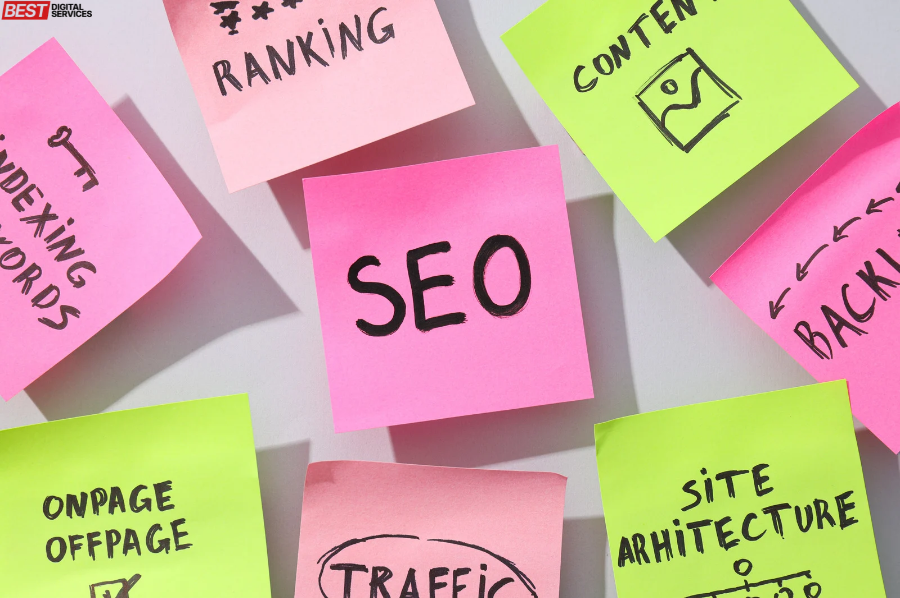
Good website content does more than fill pages with words. It helps visitors understand your business, answers their questions, and gives search engines clear information about what your website offers.
If you are wondering How to Create SEO-Friendly Website Content, the main goal is simple: create useful content for people while making it easy for search engines to understand.
SEO-friendly content can improve organic search traffic, support better Google search rankings, and help your website reach the right audience. But this does not mean adding keywords to every sentence. Modern content should be natural, helpful, original, and focused on the needs of the reader.
What Is SEO-Friendly Website Content?
SEO-friendly website content is useful, relevant, well-structured content created for both users and search engines. It uses target keywords naturally, answers search queries, and follows basic on-page SEO practices.
Good SEO website content usually includes a clear topic, logical headings, useful information, natural keyword usage, internal links, optimized images, and a strong user experience.
The best content is people-first. It should answer the user’s question before worrying about search engine rankings.
How to Create SEO-Friendly Website Content With Keyword Research
Keyword research is one of the first steps in creating search engine optimized content.
Start by finding the words and phrases your target audience uses when searching for your products, services, or information. These become your target keywords.
Do not focus only on one exact phrase. Look for related keywords, semantic keywords, and questions connected to the main topic.
For example, if your main topic is SEO content writing, related searches may include content optimization, SEO copywriting, website content strategy, and how to write content that ranks on Google.
The goal is to understand what people want to know and then create content that satisfies that need.
Understand Search Intent Before Writing
Search intent means the reason behind a search.
Someone searching for “what is SEO” wants an explanation. Someone searching for “SEO services near me” may be looking for a service provider.
Understanding search intent helps you create relevant content.
Before writing, ask:
- What question is the user trying to answer?
- What information do they need?
- Are they looking for a product, service, guide, or answer?
- What would make the page genuinely useful?
When your content matches search intent, visitors are more likely to find what they need.
Create a Clear Content Structure
A strong content structure makes your website easier to read and easier for search engines to understand.
Start with one clear H1 tag that describes the main topic. Then use H2 headings for major sections and H3 headings where you need smaller sections.
Keep paragraphs short and use bullet points when they make information easier to scan.
Clear headings also help answer engines understand individual sections of your content. This can be useful for AEO and generative search because direct answers are easier to identify when information is well organized.
Use Keywords Naturally
One of the most common SEO mistakes is keyword stuffing.
If you are learning How to Create SEO-Friendly Website Content, remember that keywords should fit naturally into the writing.
Use your primary keyword in important areas such as the title, introduction, relevant headings, and naturally throughout the page. Add secondary and related keywords where they make sense.
Keyword placement matters, but readability matters too.
Instead of repeating the same phrase again and again, use natural language and related terms. This creates better topical relevance and gives search engines more context about your subject.
Write Useful and Original Content
High-quality content should give readers something useful.
Avoid copying information from other websites and simply changing a few words. Create original content based on your knowledge, research, experience, and understanding of your audience.
Useful website content should answer real questions, explain difficult ideas clearly, and provide practical information.
If a reader finishes the page and still cannot find the answer they wanted, the content needs improvement.
This is why people-first content is important. Write for website visitors first, then optimize the content for search engines.
Optimize Your Meta Title and Meta Description
Your meta title and meta description help searchers understand what a page is about.
The meta title should be clear and relevant to the page. Include your main keyword when it fits naturally.
The meta description should briefly explain what the reader will learn or gain from visiting the page.
For example, a page about SEO content writing could use a title that clearly explains the topic and a description that promises practical content optimization tips.
Do not write descriptions only for search engines. Make them useful and appealing to real users.
Use Internal Linking
Internal linking connects one page on your website to another.
For example, an article about website content could link to your SEO services page, keyword research guide, or content marketing service.
Internal linking helps visitors discover more useful information. It also helps search engines understand the relationship between pages on your website.
Use descriptive anchor text instead of vague phrases such as “click here.”
A strong internal linking strategy can support your overall website content strategy and improve navigation.
Optimize Images and URLs
Image optimization is another important part of SEO.
Use relevant images that support the content. Compress large image files so they do not slow down the page.
Add descriptive image alt text when appropriate. Alt text helps describe images for accessibility and gives search engines additional context.
Your URLs should also be short, clear, and relevant. Avoid long URLs filled with unnecessary numbers or symbols.
These small improvements can contribute to better on-page SEO and user experience.
Make Your Content Mobile-Friendly
A large number of people browse websites using mobile devices. Your content should therefore be easy to read on smaller screens.
Use short paragraphs, clear headings, readable fonts, and properly sized images.
Avoid huge blocks of text that are difficult to read on a phone.
Mobile-friendly content is not only about design. It is also about making the entire search experience simple and convenient.
How to Write Content That Ranks on Google
If you want to learn how to write content that ranks on Google, focus on quality and relevance rather than trying to manipulate rankings.
Start with keyword research and search intent. Then create original content that fully covers the topic.
Use a logical content structure, natural keywords, useful internal links, optimized images, and clear answers.
Content length should depend on the topic. There is no magic word count that guarantees rankings. A simple question may need 500 words, while a detailed guide may need 2,000 words or more.
The best length is the length needed to properly answer the user’s question.
Make Content Ready for AEO and GEO
Answer Engine Optimization and Generative Engine Optimization focus on making information easier for answer engines and AI search systems to understand.
Use clear headings and provide direct answers to common questions.
For example, instead of taking several paragraphs to answer “What is SEO-friendly website content?”, begin with a short, direct definition and then explain it in more detail.
Use factual information, structured content, conversational language, and relevant examples.
Adding FAQs can also help address common user questions. The goal is not to write only for AI systems. The goal is to make information clear enough for both people and machines to understand.
Keep Your Content Fresh
Publishing an article once does not mean the work is finished.
Information, products, services, and search behavior can change. Review important pages regularly and update outdated information.
Content freshness can be especially important for guides, statistics, service information, and topics that change frequently.
Look for outdated links, old examples, missing information, and opportunities to improve clarity.
Regular content optimization can help maintain the usefulness of your website over time.
Why best digital companies Can Benefit From SEO-Friendly Content
As the owner of best digital companies, I understand that a strong online presence matters for businesses that want to reach customers online.
SEO-friendly content can help Best digital companies explain its services clearly, answer customer questions, and reach people searching for relevant services.
A well-planned website content strategy can support organic traffic by creating useful pages around the questions and topics potential customers actually search for.
Best digital companies can also benefit from clear service pages, helpful blog content, local SEO content, and strong internal linking. These elements can make it easier for visitors to understand the business and take the next step.
What makes best digital companies valuable is the focus on creating useful information around customer needs rather than simply filling a website with keywords. Clear content can help build trust, explain services, and provide a better user experience.
For businesses looking to improve their online presence, combining useful content with SEO best practices can create a stronger foundation for long-term digital growth.
Final Tips for Creating SEO-Friendly Content
If you want to know How to Create SEO-Friendly Website Content, keep these basic principles in mind:
- Start with keyword research.
- Understand search intent.
- Write for real people.
- Use target keywords naturally.
- Create original and informative content.
- Use clear H1 and H2 headings.
- Optimize meta titles and descriptions.
- Add useful internal links.
- Optimize images and alt text.
- Keep URLs simple.
- Make content mobile-friendly.
- Answer common questions directly.
- Update older content when needed.
- Focus on user experience.
SEO is not about writing for search engines alone. It is about creating useful information that search engines can understand and users actually want to read.
When your content is helpful, organized, relevant, and easy to understand, you create a stronger foundation for organic traffic and long-term search visibility.
FAQs
What is SEO-friendly website content?
SEO-friendly website content is useful, original, well-structured content that meets user search intent and uses relevant keywords naturally while following basic SEO practices.
How do I optimize my website content for SEO?
Start with keyword research and search intent. Use relevant keywords naturally, create clear headings, write useful content, optimize titles and descriptions, add internal links, and improve the overall user experience.
How many keywords should I use in website content?
There is no fixed number of keywords that works for every page. Use your main keyword naturally and include related terms where they genuinely help explain the topic. Avoid keyword stuffing.